Author: Niki Blane
MP lends support for fairer packaging policy after Alexir visit
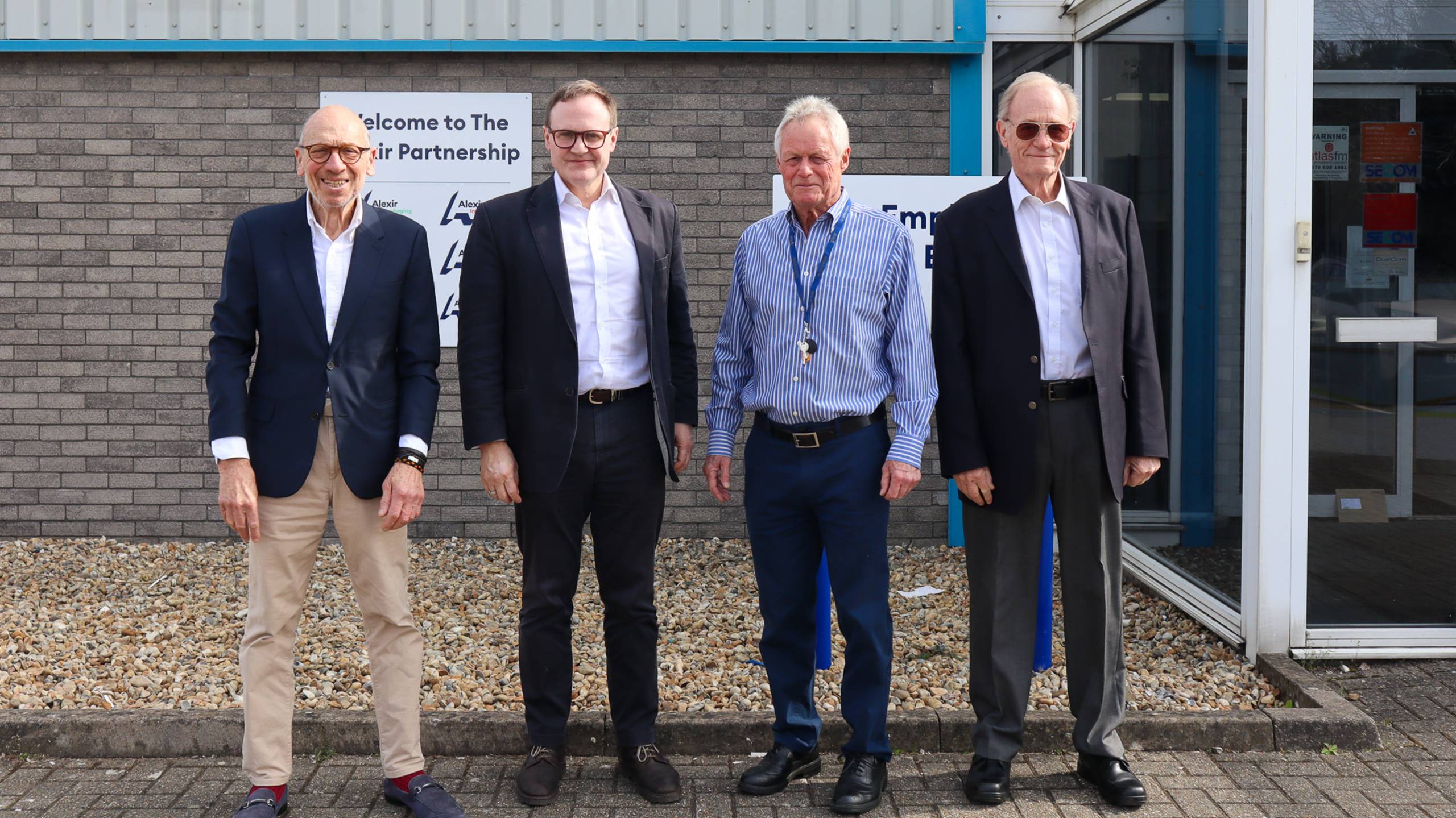
A senior Conservative MP has voiced support for ensuring the UK’s new packaging system works fairly for British businesses, following a visit to Alexir Partnership’s packaging facilities.
Tom Tugendhat, MP for Tonbridge, met with the Packaging Federation at our site to discuss the implementation of Extended Producer Responsibility (EPR) for packaging.
The discussion focused on concerns that elements of the current system risk place disproportionate costs on compliant UK businesses, with knock-on effects for consumers and the cost of living.
A threat to the progress of sustainability
Industry representatives also raised concerns that the structure of EPR fees – particularly their basis in weight – may be distorting material choices and, in some cases, reversing previous progress towards more sustainable packaging solutions.
Martin Kersh, CEO of the Packaging Federation, said:
“There is strong support across the industry for the objectives of EPR, but the system must be fair, enforceable, and aligned with how the supply chain operates in practice. At present, there is a risk that responsible UK producers are carrying a growing share of the costs, while aspects of the system may be working against both economic and environmental objectives.”
Our founder and Chairman, Robert Davison, provided a manufacturer’s perspective:
“It is essential that the system operates on a level playing field. We are seeing real cost pressures coming through. The way fees are structured has created unintended consequences running counter to investments we’ve made aimed at achieving improved environmental outcomes.
Packaging policies must be effective, fair and proportionate
Following the meeting, Tugendhat emphasised the importance of ensuring the system works for both the environment and the economy.
Tom Tugendhat said:
“It’s vital that environmental policy is effective, but also fair and proportionate. We need to ensure that the system supports responsible UK businesses, does not add unnecessary pressure to consumer prices, and genuinely delivers the environmental outcomes it is designed to achieve.”
Industry representatives highlighted concerns around enforcement gaps, including the treatment of imports and the potential for misreporting, as well as the interaction of de minimis thresholds with overall system fairness.
The meeting underlined the importance of continued engagement between policymakers and the industry to ensure the system remains both credible and effective as it is implemented.
How does Alexir Co-packing deliver NPD to market, and fast?
Anyone who works in FMCG, knows that the journey from idea to shelf can be complex. Bringing a product to market involves dozens of decisions, multiple components and a production process that has to be carefully engineered around each individual product.
Most brands who come to Alexir Co-packing fall into two camps:
– They either have huge fixed production lines that are too complex and expensive to halt or change for NPD, or
– They have no manufacturing capabilities at all, but great ideas they want to bring to market ahead of their competitors
Both need a partner who can confidently own the whole supply chain. Customers often come to us not knowing if something is possible, or thinking it might be too complicated, but this is where the Alexir Co-packing team comes into force. With our can-do approach and incredible flexibility afforded by our extensive range of production equipment we can create endless production line configurations, rapidly.
A fast way to test and deliver new product formats
Alexir Co-packing turns concepts into fully assembled retail products. The process combines engineering, logistics, testing and production planning to ensure every product is packed efficiently, safely and ready for market.
Most projects start when a customer approaches Alexir with an idea – either a completely new product, or a new format for an existing product.
A typical example is when a manufacturer produces a single product on a highly automated production line, but wants to sell it in a different retail format. Instead of redesigning their own factory lines, they can work with Alexir to create the new configuration.
For example, a manufacturer producing single packs may want to launch a value four-pack for retail. The individual products are delivered to Alexir, where the co-packing team designs a production line to assemble and package the new format. The production line is tested to ensure quality and speed of production and once approved, can be used to introduce new formats without investing in expensive new manufacturing lines.
Building bespoke production lines to deliver new product formats
One of the most important parts of the process is designing the production line itself.
Unlike highly automated factories that produce one product repeatedly, Alexir can build a bespoke production setup for each project. This flexibility allows us to offer thousands of combinations to deliver unique products.
As Dom Wing, Operations Director for co-packing, explains:
“Every production line is different. Customers want different things, so we configure the machines and the process around the product.”
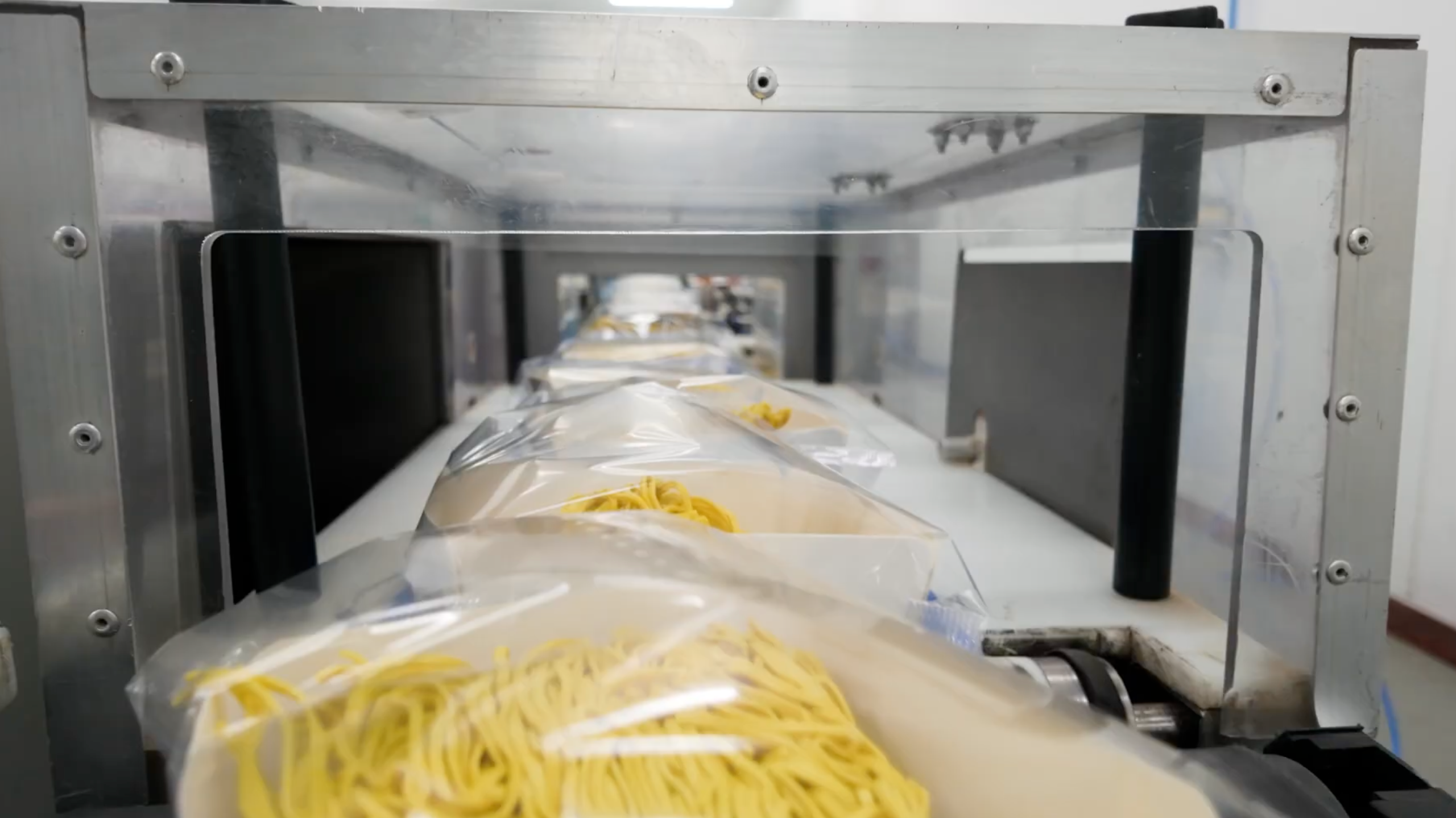
A typical production setup may include multiple machines working together, such as:
- Feeding systems
- Weighing or dosing equipment
- Pouch machines
- Coding and labelling systems
- Metal detectors
- Cartoning and packing machinery
These machines are combined in different ways depending on the product.
In some cases, the process may include blending ingredients, filling sachets and then assembling them into a retail kit. In others, the focus may be on assembling multiple finished components into a single retail pack.
This modular approach allows Alexir to create production lines that are tailored to each product.
Trials and testing the production lines
Before full production begins, the team runs trials.
These trials test:
- How ingredients flow through machines
- Whether packaging materials work effectively
- The speed the line can run at
- The final appearance of the finished product
Sometimes this happens under tight deadlines, especially when brands are racing to launch new products.
During trials, the team works closely with Alexir’s Packaging and Creative teams. Sample cartons or packaging formats may be tested on the line to ensure they are practical to pack and robust enough for retail distribution.
If something doesn’t work, it’s redesigned before production begins.
Managing multiple co-packing projects at once
Co-packing operations often run several production lines simultaneously.
At Alexir, the facility can run up to seven food production lines at the same time, depending on the resources required for each project.
Each line requires careful coordination between:
- Engineering teams setting up machinery
- Production managers running the lines
- Warehouse teams preparing stock and materials
- Quality teams ensuring compliance
Behind the scenes, the operations team plans all of this in advance to ensure materials, people and equipment are ready when production begins.
Scaling production up or down
Flexibility is one of the biggest advantages of co-packing.
While some processes are automated, others involve manual assembly. This is intentional.
Automating every process only makes sense when producing extremely large volumes. For many projects, particularly seasonal or limited-run products, manual elements make production more efficient and cost effective.
We maintain a core team while working with partner agencies to scale staffing levels up or down depending on production demand.
This allows us to respond quickly to customer requirements.
Ensuring safety and quality
Despite so many moving parts, food safety remains critical. Production areas are carefully controlled to prevent contamination and manage allergens. Different rooms are used for different types of products, and lines are separated where necessary to maintain compliance with food safety standards.
Cleaning procedures are carried out between runs, and swab testing is used to verify that equipment and production environments are safe before production starts again.
Supporting innovation and speed to market
For many brands, co-packing is a way to test new ideas before investing in expensive manufacturing infrastructure. Instead of building a dedicated production line, our flexible production lines allow brands to launch products quickly and see how they perform in the market.
“It’s a way for brands to get to market very quickly without having to invest in a huge amount of capital,” says Dom.
If a product becomes a long-term success, brands may eventually bring production in-house. If not, they can continue producing through Alexir without the financial risk of building their own production line.
This approach makes co-packing a powerful cost-effective tool for innovation.
Turning ideas into retail-ready products
From blending ingredients and filling sachets to assembling kits and packaging finished goods, Alexir Co-packing handles a wide range of production challenges.
But our vast arsenal of machinery, experienced operators and integrated support from the wider Alexir Partnership, ensure brands can move from concept to shelf faster and more efficiently.
Behind every product is a carefully engineered process designed to make it work.
So why use Alexir Co-packing?
To break it down, there are 6 core reasons that brands use Alexir Co-packing, rather than internal production lines or other Co-packing facilities…
-
Speed to market
New formats and products can be developed and launched far faster than building new manufacturing lines. In some cases, projects move from concept to production in just a few months.
-
Cost-effective innovation
Instead of investing in expensive equipment, brands can test new products in the market first. If the product succeeds, they can scale up later.
-
Flexible production
Each project is built around the product using a wide range of machines and processes to create the ideal production process.
-
Bespoke formats
From meal kits to value packs, our turnkey Partnership structure and ‘can-do’ attitude allow brands to create new shelf-popping retail formats in one smooth operation. Where there’s a concept, we can create it.
-
Scalable production
Our factory typically runs 12-hour shifts, with the ability to add night shifts when large orders need to be completed quickly.
-
True operational agility
With multiple production rooms, experienced engineers and flexible staffing, we can adapt quickly to changing customer needs.
Want to explore what’s possible?
If you’re looking to bring a new product to market, we’re ready to support you.
With incredible flexibility afforded by near-endless production line configurations, and a ‘can do’ attitude, we can help you to deliver stand-out products to the shelves quickly, without breaking your own production lines or investing in expensive equipment. Get in touch to get started